Image Processing
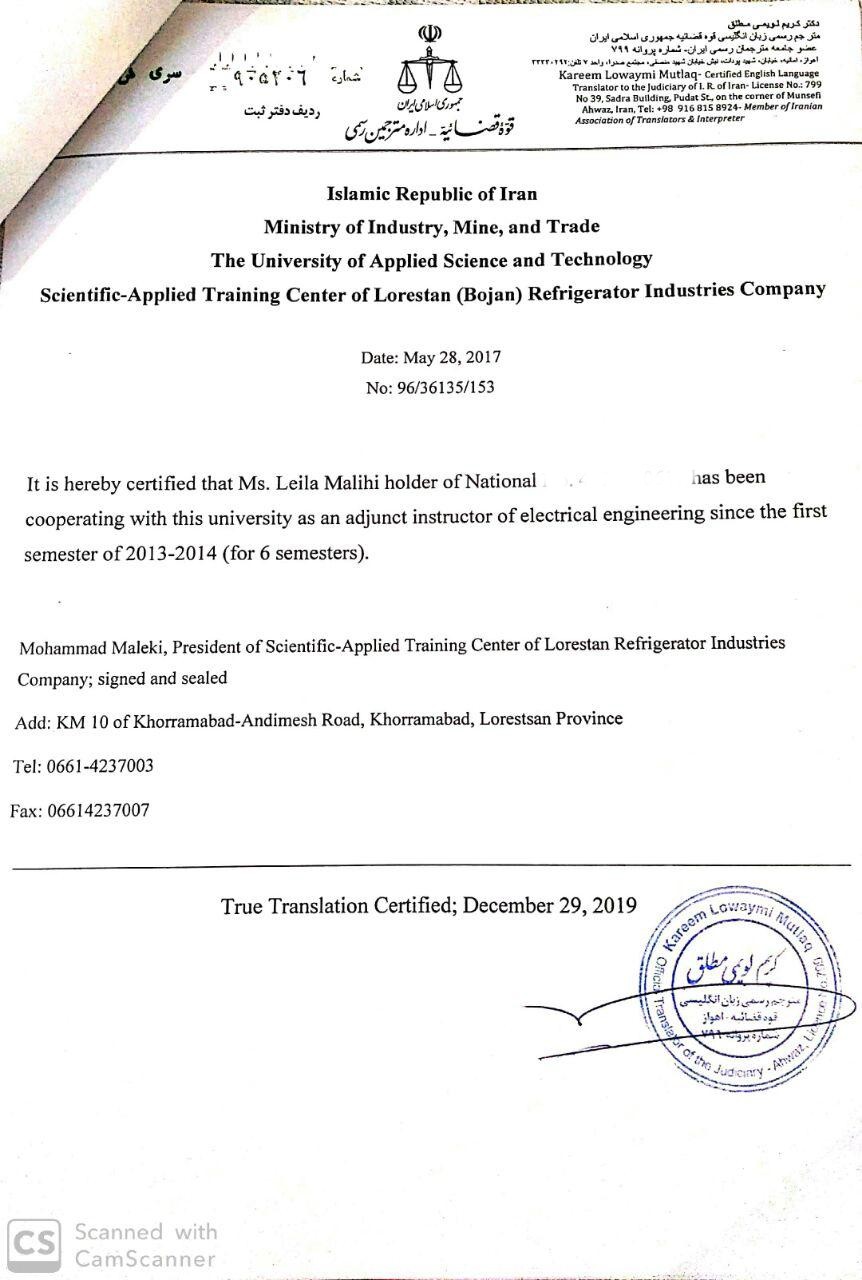
Undergraduate courses, University of Applied Science and Technology, Department of Electronic, 2016
Image processing refers to the manipulation and analysis of digital images using algorithms and techniques to extract meaningful information or enhance the visual quality of images. It is a multidisciplinary field that combines concepts from computer science, mathematics, and signal processing. In this course I started with an introduction to digital image processing, covering the basic concepts, applications, and components of an image processing system.
Image Enhancement: This topic explores techniques for improving the quality and appearance of images. It covers point processing operations, histogram equalization, spatial filtering, and frequency domain filtering.
Image Restoration: This section focuses on restoring degraded images, including techniques for noise removal, image deblurring, and image reconstruction from projections.
Color Image Processing: The book discusses color representation, color models, and various color image processing operations such as color transformations, color image enhancement, and color image segmentation.
Wavelets and Multiresolution Processing: This topic introduces wavelet transforms and their applications in image processing. It covers multiresolution analysis, wavelet decomposition, wavelet-based denoising, and compression.
Image Compression: We discussed different image compression techniques, including lossless compression, transform coding, and predictive coding. It also covers popular compression standards such as JPEG and JPEG2000.
Morphological Image Processing: This section focuses on morphological operations for image analysis and processing. It covers dilation, erosion, opening, closing, and other morphological operations, along with their applications in image segmentation and shape analysis.
Image Segmentation: The book explores various techniques for partitioning an image into meaningful regions or objects. It covers thresholding, region-based segmentation, edge-based segmentation, and clustering-based segmentation.
Representation and Description: This topic discusses methods for representing and describing image features. It includes discussions on boundary descriptors, regional descriptors, and texture analysis techniques.
Object Recognition: The book covers techniques for recognizing and classifying objects in images. It includes discussions on feature extraction, pattern classification, and object recognition algorithms.
The book is widely used as a textbook in universities and is known for its clear explanations, examples, and MATLAB-based exercises to reinforce the concepts presented Reference. Certificate